Quick Answer: Mirroring a dance video flips the instructor so their right side matches your right side. This removes the mental work of reversing every move in your head. Without mirroring, you have to translate left to right while also trying to process the footwork, the timing, and the music. That is too much for a beginner brain to handle. Mirroring removes one layer of confusion so you can focus on actually learning the movement.
You are watching the tutorial. The instructor steps to their right. You step to your right. But now you are going the wrong way.
You pause. You rewind. You try again. The instructor steps left. You step left. Wrong again.
This is one of the most quietly frustrating parts of learning dance from a video. It is not the choreography that is hard. It is the orientation. Your brain is trying to reverse every single move in real time, and it is exhausting.
Here is the truth: you are not confused because you are bad at dance. You are confused because you are doing unnecessary mental work.
The Problem: Facing the Instructor
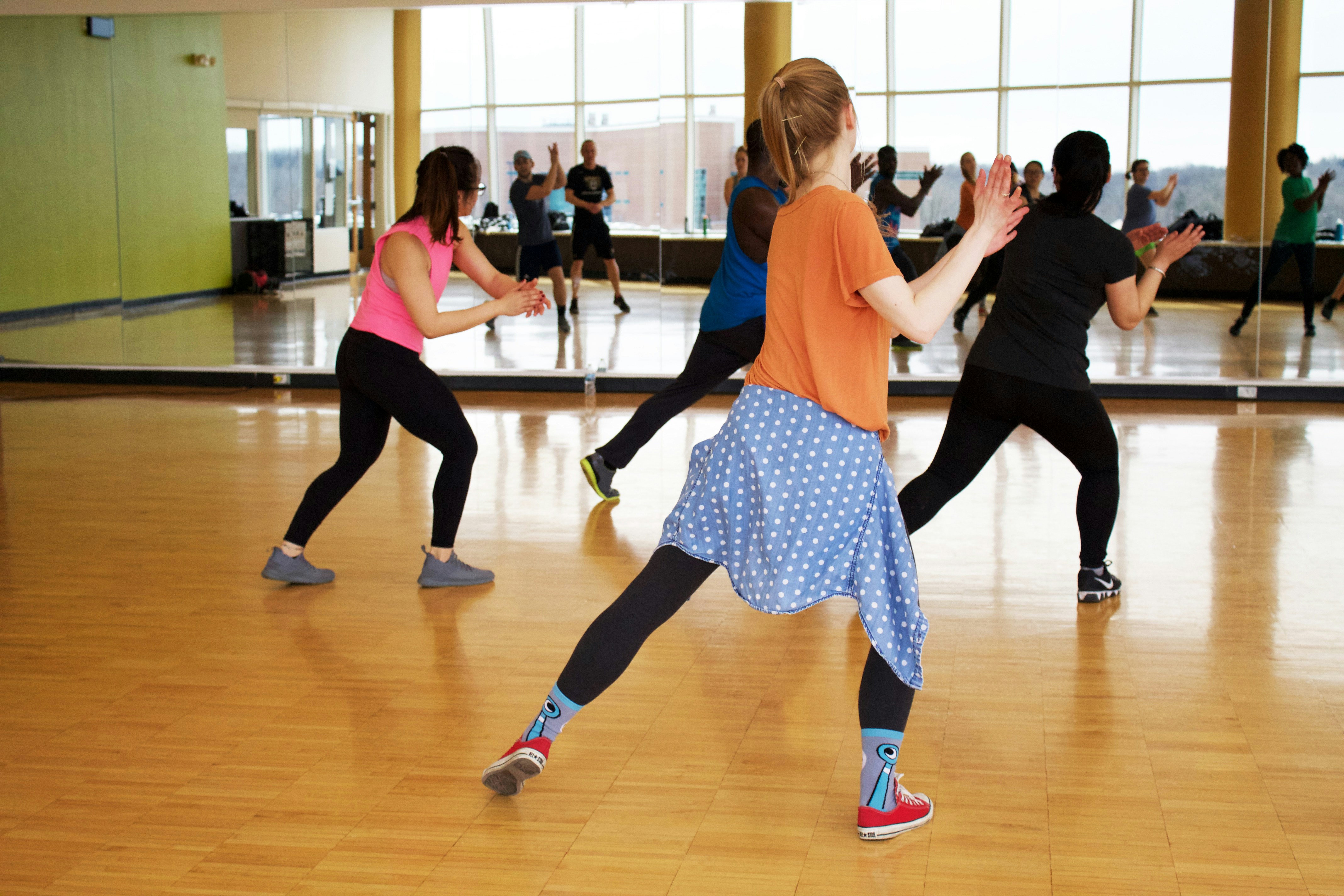
When you watch a dance tutorial, the instructor is usually facing the camera. That means they are facing you.
This feels natural. It is how you would stand if you were teaching someone in person. But it creates a problem.
If the instructor raises their right arm, it appears on the left side of your screen. If you copy what you see, you raise your left arm. Now you are doing the opposite of what the instructor is doing.
If the instructor steps to their right, they move toward the left side of your screen. If you copy what you see, you step left. Now you are going the wrong direction.
Every single move requires you to mentally flip it. Left becomes right. Right becomes left.
That is a lot of cognitive work. And it happens on top of everything else you are already trying to process: foot placement, arm position, timing, rhythm, and transitions.
No wonder you feel overwhelmed.
Why This Matters More Than People Realize
Most tutorials do not address this problem. They just assume you will figure it out.
But here is what happens when you do not have mirroring.
- You slow down. You have to pause and think about every move. This breaks your flow and makes it harder to feel the rhythm.
- You make mistakes. You step in the wrong direction. You raise the wrong arm. You build bad habits that take time to unlearn.
- You get frustrated. The moves look simple when the instructor does them. But when you try to copy them, everything feels backwards.
- You quit. This is the worst outcome. And it happens to a lot of beginners, all because of a problem that could have been solved with a simple flip.
The Solution: Mirror the Video
Mirroring a dance video flips the image horizontally. The instructor's right side appears on your right side. Their left side appears on your left side.
Now when the instructor raises their right arm, it appears on the right side of your screen. You raise your right arm. You are doing the same thing they are doing.
When the instructor steps to their right, they move toward the right side of your screen. You step right. You are going the same direction.
The mental reversal is gone. You can just copy what you see.
This is how dance is taught in person. When you are standing next to someone, you can just follow along. Mirroring recreates that experience on a screen.
How to Find Mirrored Tutorials
Not all tutorials are mirrored. Here is how to find them.
| Method | How to Do It |
|---|---|
| Search for it | Add "mirrored" to your search query. Many creators make mirrored versions of their tutorials specifically for this reason. |
| Check the description | Some creators note in the description whether the video is mirrored or not. |
| Look for the flip | Watch the first few seconds. If the instructor appears to be moving in the same direction as you would, it is likely mirrored. |
| Use a tool | Some apps and browser extensions can flip a video horizontally for you. |
How Avonya Solves This
Avonya was built with this problem in mind.
Every routine is filmed and produced so that mirroring is not something you have to think about. The orientation is already set up for learning. You do not have to search for a mirrored version. You do not have to mentally reverse each move.
You just watch, match, and move.
- Watch means you study the movement at a pace your brain can process. No confusion about which side is which.
- Match means you step into Phantom Mode. A glowing guide on your camera feed shows you exactly where to place your feet and hands. The guide is aligned to your body, not the instructor's body. So when you see the guide move right, you move right.
- Move means you let your muscle memory take over. You are not thinking about orientation anymore. You are just dancing.
You can toggle the mirror on or off, adjust the speed, and loop any section. You control how you practice.
The Deeper Problem: Cognitive Load
There is a concept in learning science called cognitive load. It refers to how much mental work you are doing at any given moment.
When you are learning a new movement, your cognitive load is already high. You are processing foot placement, arm position, timing, rhythm, and coordination.
Adding the mental reversal of left and right on top of that pushes you over the edge. Your brain cannot handle it. So you freeze. You make mistakes. You feel clumsy.
Mirroring reduces cognitive load. It removes one layer of mental work so you can focus on the actual movement.
This is not a shortcut. It is a smarter way to learn.
When Mirroring Does Not Help
Mirroring solves the orientation problem, but it is not the answer to everything.
Some dancers prefer to learn without mirroring because it helps them build spatial awareness. If you are learning a partner dance, you may need to understand both orientations.
The key is to use mirroring when you are first learning a routine, then practice without it once you understand the movement. That way you get the benefit of reduced confusion early on, and you build flexibility later.
How Avonya helps: You can toggle the mirror on or off at any time. Match the structure when you are learning. Practice without it when you are ready.
The Avonya Method: Watch, Match & Move
Avonya was built on a simple insight: dance starts by training the way you watch movement. Brain first, then body.
- Watch means you train your brain first. Study the movement slow enough that your neurons can actually process it. No left-right confusion. No mental reversal.
- Match means you step into Phantom Mode. A visual guide on your camera feed shows you exactly where to place your feet and hands. The guide is aligned to you, not the instructor.
- Move means you let your brain's new pathways take over. Gradually increase the pace until you hit tempo.
Every routine is broken down into bite-sized chapters. You can slow down, loop, and repeat. Perfect for self-paced practice at home.
Stop Confusing Left and Right. Start Dancing.
You have spent hours trying to follow tutorials, feeling like you are always going the wrong way.
But you are not the problem. The orientation is.
Mirroring removes the confusion. It lets you focus on the movement instead of the mental math.
Avonya was built for people like you. People who want to learn choreography without pressure. People who need a clear, visual guide. People who want to practice privately at home.
Watch. Match. Move.
Try Avonya free and learn your first routine today.
Download on the App StoreWatch, Match & Move. Your best self is one step away.